Friday, 4 January 2013

Black-bellied Dipper

Website: www.wildlife-photos.co.uk
Facebook: https://www.facebook.com/JoshJaggardPhotography

Today I went to photograph the Black-bellied Dipper which had been spotted again in Thetford. It was around for a month before Christmas then disappeared for awhile. It didn't take me long to find it, you cant miss the white throat dipping up and down in the water. It spent most of the day sitting on the bank and occasionally went into the water to feed. They are great little birds and not normally found in Norfolk.

This dipper is different to our resident white-throated dipper that we get in the UK. Its a subspecies which instead of having a brown chestnut belly, it has a black belly thus the name Black-bellied dipper. It is one of the continental species that breed in the north of Scandinavia and migrates south to escape the cold winters. The UK is sometimes lucky to get a few visitors each year. Norfolk is an unusual area for it to come, as we don't have any type of dipper in the county but I wont complain.

Here are a few shots from today and before Christmas.

Black-bellied Dipper looking up

Black-bellied Dipper portrait

Black-bellied Dipper

Black-bellied Dipper autumn colours

Black-bellied Dipper reflection

It was a good shoot and met some nice birders and photographers but it was ruined by a few. Two photographers turned up and had no respect for this bird. Their only aim was to get as close as possible and they didn't have any field-craft or care about the dipper. They spent 20 minutes continually getting too close and scaring the dipper further and further up the stream. This resulted in the stream ending and the dipper having to fly off down the main river where it had nowhere to land due to the height of the river.

Tips:
  • Keep an eye out on local birding sites for unusual visitors.
  • Fieldcraft is essential to get close without disturbing. Today I studied the dipper, to see its favorite spots. Then when it flew elsewhere, I positioned myself appropriately and the dipper return after 5-10min. I was in good range and didn't need to move, meaning I didn't disturb it.
  • Still water makes for good reflections. So if you get a windy day, return on a calmer day and you can get some completely different shots.

Hope you enjoyed the blog, hopefully more images to come. Keep an eye on my facebook page for more:
https://www.facebook.com/JoshJaggardPhotography 


Sunday, 2 December 2012

Morning Otter

Website: www.wildlife-photos.co.uk
Facebook: https://www.facebook.com/JoshJaggardPhotography

In the past few months I have herd a few rumours about an otter on a local river, where I photograph regularly. After speaking to around 15 different people and visiting the site a number of times, I narrowed down the most likely area I would see it. But after reports that an otter had been killed on the road last week, my hopes weren't to high.

Two days ago I was luckily enough to see 2 otters briefly swimming down the river before disappearing, which was great news. This meant that there must be a family or a good number of otters in the area considering one was killed the other day and I had still seen 2.

This morning I got up in the frost and went in search once again. After about an hour of nothing but dog walkers, I decided to move to a different part of the river. This was a hard choice as the lighting in the other part of the river was extremely bad. None the less I decided to try.

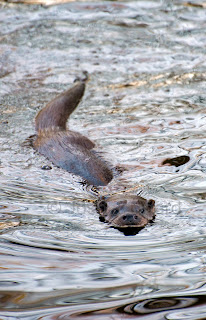
Straight away I saw some bubbles moving around on the water surface. This is a key sign of an otter swimming under the surface. I followed it and moments later an otter popped its head up. I decided to watch it for 5 minutes and see where it was likely to go and its current behaviour. I found that it was hunting in a specific spot. So when it went underwater again I quickly ran to the waters edge and got as low as possible, to prevent being spotted and getting a low photography angle.

For the next 15 minutes it stayed in the area and I got the following shots.

Josh Jaggard
Floating Otter
Josh Jaggard
Intrigued Otter
Josh Jaggard
Otter playing with some weed
Josh Jaggard
Otter swimming towards me
Josh Jaggard
Otter chewing on a small fish
Josh Jaggard
Head shot of the Otter
Josh Jaggard
Otter chewing some weeds

Josh Jaggard
Curious Otter

This was a great experience and only my third ever encounter with an Otter. I am hoping to photograph them more in the coming weeks. The shot below was taken only half a meter away from me, Amazing experience.
Otter in hands reach
Tips:
  • Speak to as many locals as possible. They know more then anyone, especially dog walkers!
  • Take a flask of tea, to keep warm on these cold morning. You will last longer in the field.
  • Good field-craft = Better shots and closer encounters. Study the behaviour.
  • Patience and perseverance.
  • With otters, look for signs of otter spraint (excrement) and also look for bubbles on the surface.
Hope you enjoyed the blog, hopefully more otters to come. Keep an eye on my facebook page for more:
https://www.facebook.com/JoshJaggardPhotography

Wednesday, 26 September 2012

Little Surprise

New website is up and running, so take a look and let me know what you think.
www.wildlife-photos.co.uk

Last month I took the dogs for a walk along the beach and came across a Little Tern breeding area. Since then I have been busy with my graduation and going to Morocco, so apologies for the extremely late post.

These Little Terns were spread out all over the beach. There was a large section cornered off where they were breeding but the chicks had just fledged and started wondering around. Everywhere you looked you could see a little camouflaged tern hiding in the sand. Below is one of them running towards me, its mum was hovering above me with a fish.

Happy Little Tern chick

The adult Little Terns could be seen fishing in large quantities, diving into the water and catching sand eels.

Adult Little Tern
 
Below are a series of images showing the process of the adult terns feeding their young.

Little Tern calling for food

Adult Little Tern returning to its chick with a fish

Little Tern calling for food


Little Tern watching adults with fish
Little Tern chick receiving a Sand Eel

Little Tern chick trying to eat a Sand Eel

It was a great experience and Norfolk is a key location for the future of these birds, as it holds one of the last colonies of breeding birds. The Little Tern is currently on the Amber List, so it's important to protect their habitat and their breeding grounds around the Norfolk coast.

Sadly when I was photographing here, a couple walking their dogs didn't listen to all the signs saying 'Keep dogs on their leads, due to breeding area.' Consequently their dogs attacked and killed a chick, which was trying to hide in the sand, waiting for its mother. Needless to say I went mental and shouted continuously at them for a awhile, until they put their dogs on the leads and left. So please listen to the signs people, they are there for a reason.

Little Tern fishing at sunrise.
Tips:
  • Always take your camera, wherever you go. You never know what you will see.
  • Be patient and let the birds get use to your presence. You will be able to get a lot closer.
  • Try and concentrate on one bird, when photographing a large flock it's easy to get distracted by others and miss the shot you have been waiting for. This happened a number of times.

Also I have created a Facebook page, would be grateful if you like the page.
https://www.facebook.com/JoshJaggardPhotography


Follow me on Twitter and on here.

Tuesday, 3 April 2012

Norfolk Broads - An Owl's Heaven

I have made a recent update to my website, check it out: www.wildlife-photos.co.uk

Recently I have been trying to photograph Barn Owls. A month ago, I was told of a local location where one had been spotted daily. After spending a week and a half, most mornings and evenings, the Owl never turned up. It still hasn't been spotted and it has been 3 weeks now, so I feel something might have happened to it or hopefully it had just relocated.

During a visit to a wildlife reserve I met Norman Tottle, who is a Norfolk-based photographer who specialises in the landscape and wildlife of the Norfolk Broads. He told me to check out a number of different areas where he regularly finds Barn Owls.

So for the past few days I have been traveling to the Broads to photograph the Owls, early morning and evening. I knew the Norfolk Broads was well known for its wildlife, but didn't realise how bio-diverse it is. Currently, at one location you can spot daily: a Barn Owl, Short Eared Owl, Little Owls, Cranes, Marsh Harrier, Kestrel, Cettis Warblers, Great Crested Grebes, Herons and the elusive pigeon. Also Otters are sighted occasionally, so I am always on the lookout.

I felt as if I had won the lottery finally getting to see the owls and all the other species. For the last few days though, I have just been concentrating on the Barn Owl and Short Eared Owl. Here are a few of my pictures so far:

Barn Owl in flight - Norfolk

Barn Owl hovering - Norfolk

Short Eared Owl watching me - Norfolk

Random Heron - Norfolk

Barn Owl flying over the reeds - Norfolk

Barn Owl roaming - Norfolk

Short Eared Owl Flying low - Norfolk


Tips:
  • Wear camouflage if you want a closer view.
  • Speak to locals, they can guide you to the best areas.
  • Best time to see Owls, is after a few days of rain, as they are out during the day to find food. They can't hunt very well in the rain, so they are normally hungry.
Follow me on Twitter and on here.


Thursday, 29 March 2012

RSPB Minsmere

Done a small update to my website check it out: www.wildlife-photos.co.uk

After signing up to be a member of the RSPB, I decided to go to one of their well known reserves that I hadn't been to yet, Minsmere. I wanted to spend most of the day there, so I set off at 5am because it takes a hour and 10 from mine.

I decided to spend the whole day in one hide, as I am yet to do this. This meant that I didn't see much of the reserve but allowed me to document and record the same area all day. It ended up being a 10 hour shoot with no breaks and in 1 hide. This was a test of my patience as there were long periods with no activity.

View from the hide, 2 deer in the water and 1 on the path.

The key species I wanted to photograph were Bittern and Otters but both are elusive species.

I didn't see any otters but did end up seeing 4 bitterns. 2 flew straight past the hide and another one walked down a path next to the hide for about a minute, but was quiet a distance away from me. It wasn't until 3:30pm, 9 hours into my shoot that one flew into the reed beds but the lighting wasn't great for photography.

Other species I photographed and documented were:

4 Bitterns, 4 Marsh Harriers collecting reeds for nest material, 4 Red Deer, 2 Water Rail, 2 Cetti's Warblers, a Kingfisher, 2 Monkjack's, Mating Greylag Geese, Mating Coots, Reed Bunting, Squirrel and the rare Blue Tit.

So it wasn't a bad day really and I met some nice people as well. One being Norman Tottle who gave me a few locations and local knowledge around the area, which was good.

Here are a few of the images from the day.


Bittern flying over the water.
Water Rail flying into the reeds.
Marsh Harrier collecting reeds for its nest.
Red deer in the reeds.


Bittern flying over the reeds.
Cetti's Warbler displaying for mate.
Cetti's Warbler hiding in the reeds.
Bittern wading through the water.
Marsh Harrier soaring.
Red deer.

Red deer in the water.

Red Deer grazing.


During the day, 4 Red deer came into the water to cool down. It was a great experience even though it annoyed some twitchers who stormed off in angry. They then came and slept in front of the hide for the next hour. They were too close to photograph 90% of the time, but great to watch.

Tips:
  • Patience pays off.
  • Wear suncream in hides (My hands got burnt)
  • Speak to people and you will pick up local knowledge and tips.
Follow me on Twitter and on here!

Thanks for looking

Thursday, 22 March 2012

RSPB Norfolk

After returning home from Cornwall,  I decided to go on a shoot in North Norfolk as the weather was great. I wanted to find Black Throated Divers and Black Necked Grebes, so I did a little research on recent sightings and came to the conclusion that I should head to Snettisham and Titchwell, which are both RSPB Reserves.  They had both had sightings in the past few weeks, so it was a long shot but was better then nothing.

I ended up not finding either of the birds I wanted to, which is normally the case with wildlife photography, but still had a great day and photographed a number of different species.

Key Species:
Great Egret, Avocets, Skylark, Bar-Tailed Godwits, Shovelers, Barnacle Geese, Goldeneyes and a Common Lizard

Here are a few shots from today:

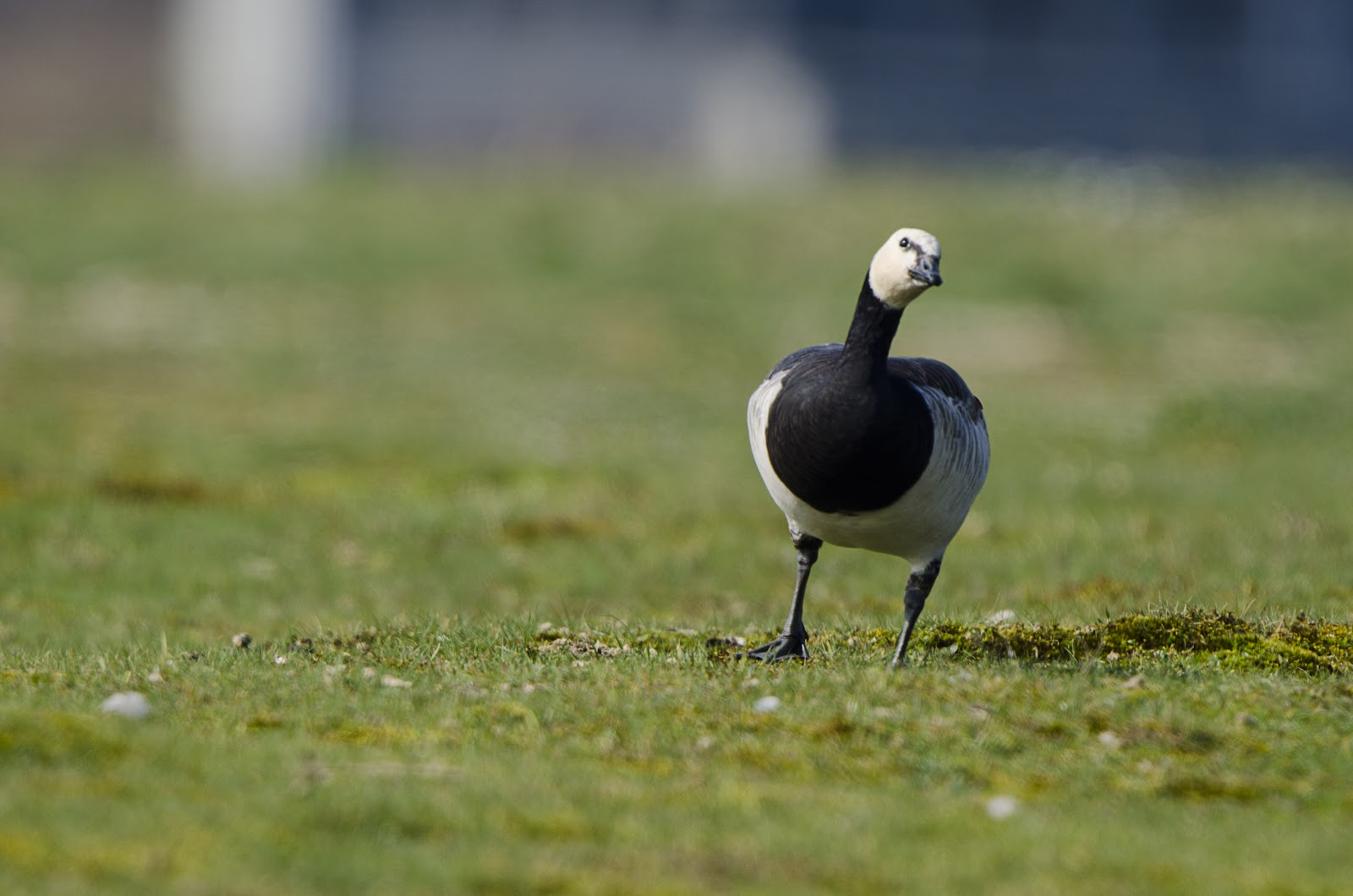
Barnacle Goose

Avocets Mating

Avocet Feeding

Skylark

Flock of around 1000 geese

Bar-Tailed Godwit wading

Shoveler Preening

Shovelers

Tips:
  • Research locations to have more luck finding specific species (even though I didn't find them on this occasion)
  • Make the most of locations and photograph all of the species
  • Patience in the hides pay off for behaviour shots ie. Avocets mating
Follow me on Twitter: @Josh_Jaggard

And check out my website: www.wildlife-photos.co.uk