For my final year project at Falmouth University, I am looking at the Carrick Roads, which is a flooded valley on the south coast of Cornwall. Last week I decided to create a floating hide, which enables me to photograph the species at water level.
I wasn't sure if the floating hide was actually going to float, let alone how close I was going to be able to get to the species. So I decided to give it a test run on a Little Grebe. They are known to be fairly skittish, so it was an ideal bird to try it out on.
 |
| Little Grebe. |
 |
| Little Grebe Portrait. |
As you can see, the hide has worked really well and got me much closer to the subject and allowed a very low angle which has created a very shallow depth of field.
After this success I was eager to try it out again but the weather had been too windy until today. So today I went to a familiar part of the Carrick Roads allowing me to give the hide a proper try out. My first sighting was of a Cormorant drying off on a buoy. I ended up hovering around the cormorant for about 10 minutes getting so close that my lens couldn't focus at times. As this was a test run I wanted to get close up profile shots of species. Here are a few of the Cormorant.
 |
| Cormorant drying off. |
 |
| Full frame of a cormorants head. |
After about 10 minutes a local fishing boat came up behind me, with some very confused people on board. I heard them approaching and questioning what on earth the contraption in front of them was. They thought I was some type of rubbish that had been thrown over board from a boat until they got within 5m of me and realised that I was a person dressed in camouflage inside a floating hide. They were still very confused.
Anyway I carried on with my shoot but sadly the boat had scared off the Cormorant.
I moved on looking for the next subject to photograph but was
struggling to find anything, until I saw a flash of blue in the distance
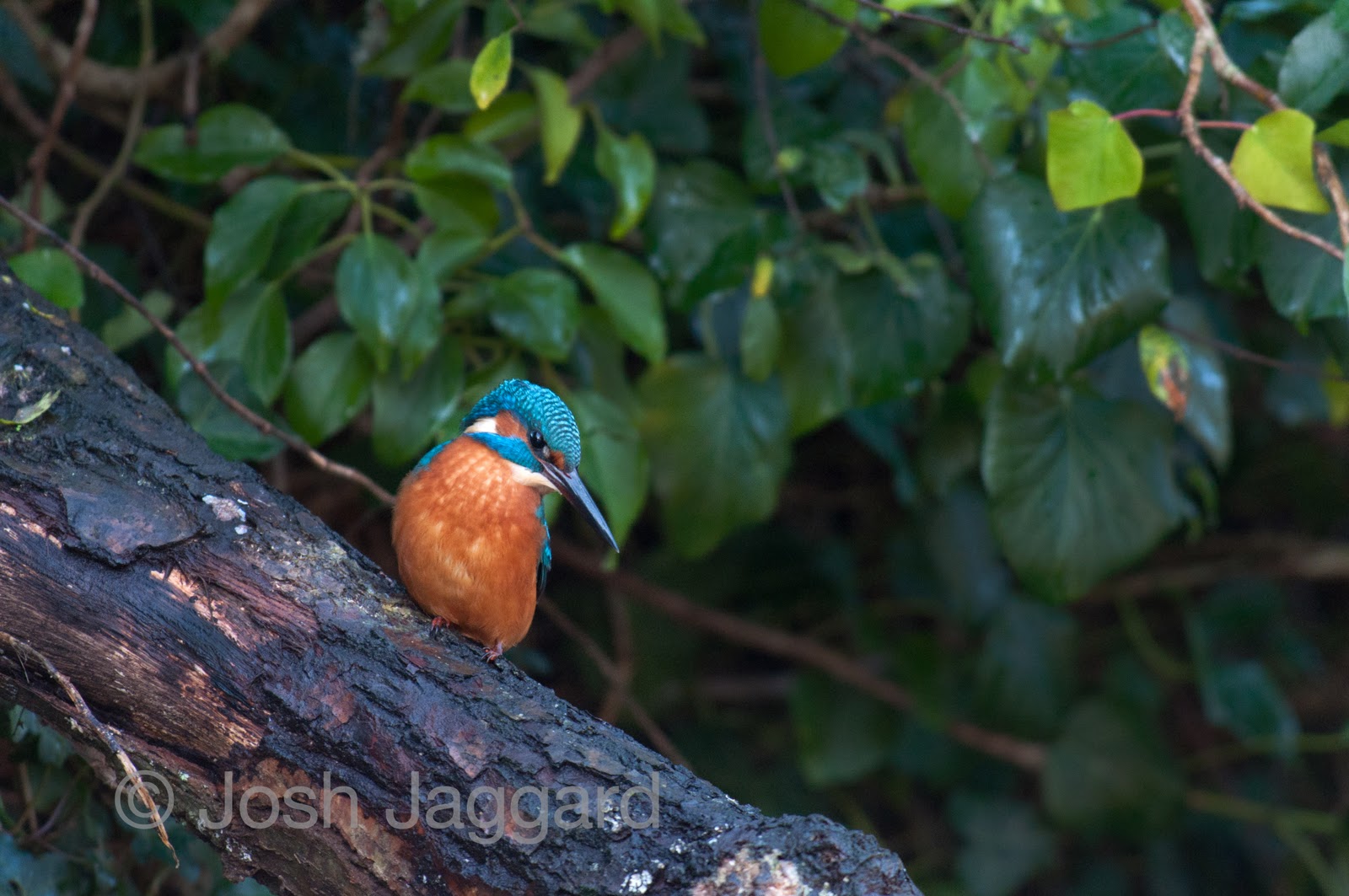
on the other side. I quickly paddled across and sure enough it was a Kingfisher. These birds too are very skittish when it comes to people, so it was a real test of how well my hide would disguise me . To my amazement I got closer then I have ever been to one of these stunning birds. All of the images shown here are full frame.
 |
| Kingfisher sitting on it's perch. |
 |
| Kingfisher sitting on a pile of seaweed fishing. |
 |
| Me testing out how close I could get to it. |
I followed the Kingfisher around for about 30 minutes, until it suddenly dived about a metre in front of me, caught a fish but then was immediately chased off by another Kingfisher that appeared out of nowhere. Fantastic to witness.
Tips:
- Make a floating hide, they can work so well.
- Don't be scared to try something new.
- Stay with your subject for as long as possible.
Follow me on twitter at: @Josh_Jaggard
Also don't forget to check out are Graduation Show in Bristol in June. Check it out and follow: Website: www.natureexposed.org
Facebook: www.facebook.com/GraduateShow